

Can I Get Pregnant During Perimenopause?
Wondering if pregnancy is possible during perimenopause? Hormones shift, but ovulation can still happen unexpectedly. Learn how your body changes and what precautions you should take.
Getting an abnormal Pap smear result can feel stressful. You might wonder what comes next and if you need more testing.
At Women's Health Services in Arlington and Grand Prairie, Texas, we understand your concerns. Our all-female OB/GYN team, led by Dr. Joan Bergstrom, provides compassionate care.
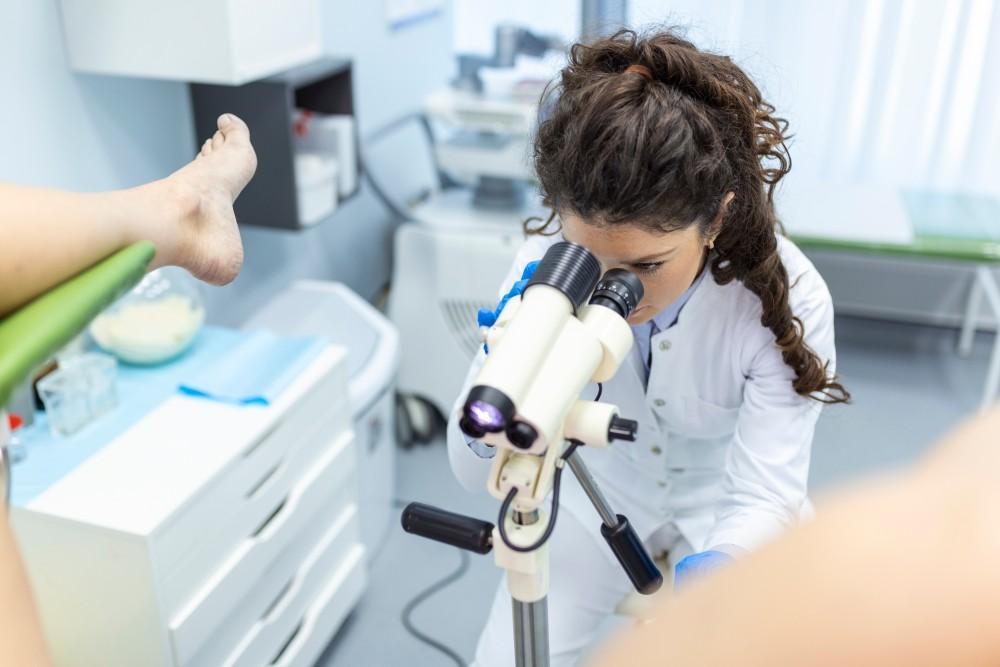
If your routine screening shows unusual cells, we may recommend a colposcopy. This simple, in-office exam helps us look closely at your cervix and identify areas that may need further evaluation.
We recommend this exam when your screening results suggest a higher risk of cervical precancer or other significant cervical abnormalities. We don’t rely on a single test result to make this decision. Instead, we look at your age, current results, and past health history.
If you test positive for HPV, we can sometimes perform additional laboratory testing on the same sample to better determine whether a colposcopy is needed.
We use these personalized risk assessments to help avoid unnecessary procedures while identifying patients who need additional evaluation.
A colposcopy is a diagnostic exam, not a treatment. It helps us find and map any abnormal areas.
The exam feels very similar to a standard pelvic exam. We insert a speculum and apply a mild vinegar solution to your cervix. This solution makes abnormal areas turn white, and the procedure typically takes 10-20 minutes.
We use a special magnifying lens called a colposcope to view these areas. If we see abnormal tissue, we may take a tiny sample, or biopsy, for lab testing. Our team performs this quick exam in the comfort of our office.
Preparing for your appointment is simple. You want to make sure your cervix is easy to examine.
We instruct patients to stop using any vaginal medicines or creams for 24-48 hours before the exam. You should also avoid vaginal sex, tampons, and douching during this two-day window.
If we take a biopsy during your visit, you will need to let your cervix heal. We will guide you through your recovery steps, which include avoiding tampons and intercourse for a short time.
If you’ve had an abnormal Pap smear or need to schedule your annual exam, we’re here to help. Our compassionate team will guide you through every step of your care. Contact Women’s Health Services by calling our nearest office or booking an appointment online today.


